

Blog
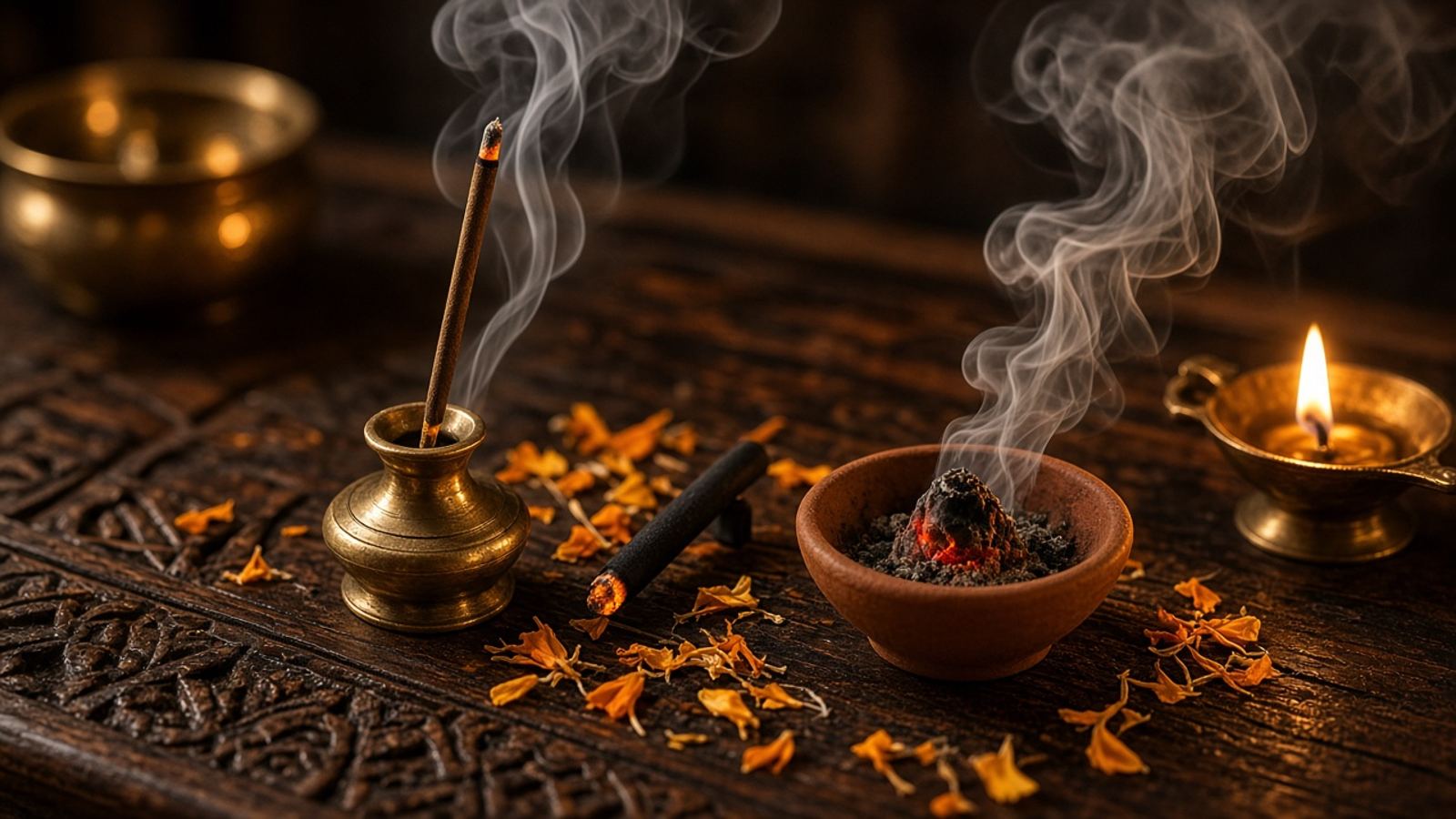
Agarbatti vs Dhoop vs Sambrani: What Is the Difference?
Quick answer: Agarbatti is incense paste rolled on a thin bamboo stick and burns slowly with a soft fragrance. Dhoop is solid incense with no bamboo core, shaped as sticks, cones or cups, and gives a stronger, denser aroma. Sambrani is a resin-based type of dhoop known for thick, purifying smoke.
If you run a puja store, supply supermarkets or import incense for your country, customers will often ask which one to buy. This guide explains how each product is made, how it burns and when people use it, so you can plan the right product mix.
What is agarbatti?
Agarbatti is the classic Indian incense stick. A paste of charcoal or wood powder, natural binders and fragrance is rolled onto a thin bamboo stick, then dried and perfumed. Because only a thin layer of material burns at a time, agarbatti gives a gentle, steady fragrance that fills a room without heavy smoke.
It is the everyday choice for morning and evening puja, meditation, yoga studios and homes that want a light scent. Popular fragrances include rose, sandalwood, jasmine, lavender and mogra. See our range of agarbatti and incense sticks.
What is dhoop?
Dhoop is incense without a bamboo core. The whole stick, cone or cup is made of aromatic material such as herbs, resins, wood powders and ghee or essential oils, so the fragrance is richer and more intense. Dhoop comes in several forms:
- Dhoop sticks: solid, coreless sticks with a strong traditional aroma.
- Wet dhoop sticks: soft, moist sticks that release a deep fragrance and are popular for temple-style rituals.
- Cup dhoop: small cups that light easily and burn in a compact holder, convenient for daily use.
What is sambrani?
Sambrani traditionally means benzoin resin, burned on hot coal to fill the home with thick, sweet smoke. It is linked to purifying the air, Friday and festival rituals, and drying hair after a bath in South Indian homes. Today most buyers prefer ready-to-light sambrani dhoop cones and sambrani cups, which give the same experience without coal.
Agarbatti vs dhoop vs sambrani at a glance
| Feature | Agarbatti | Dhoop | Sambrani |
|---|---|---|---|
| Bamboo core | Yes | No | No |
| Fragrance strength | Light to medium | Strong | Strong, smoky |
| Smoke | Low | Medium | High |
| Common forms | Sticks | Sticks, wet sticks, cups, cones | Resin, cups, cones |
| Typical use | Daily puja, meditation, home fragrance | Rituals, festivals, larger spaces | Purifying rituals, festivals, traditional homes |
Which should retailers and importers stock?
Most successful stores carry all three, because they serve different moments. Agarbatti is the high-volume daily product. Dhoop sticks and cup dhoop serve customers who want a stronger fragrance for rituals and festivals. Sambrani cones and cups sell well in South Indian communities and around festivals. Demand also rises before Diwali, Navratri and other festive seasons, so planning stock early helps. Read more about the role of agarbatti in Indian festivals on our blog.
For overseas buyers, a mixed container of agarbatti and dhoop lets you test what works in your market before scaling one line. We already supply buyers in many countries; see the countries we supply.
Buy agarbatti, dhoop and sambrani in bulk
Shubhlabh Agarbatti, a brand of Preeti Corporation, manufactures agarbatti, incense sticks, dhoop sticks, wet dhoop, cup dhoop and sambrani dhoop cones at our factory in Vasai East, Maharashtra. To discuss wholesale or export orders, get a quote and brochure or contact us.
Frequently asked questions
What is the main difference between agarbatti and dhoop?
Agarbatti is incense paste rolled onto a thin bamboo stick, so it burns slowly from the tip with a light, lingering fragrance. Dhoop has no bamboo core: it is a solid stick, cone or cup made entirely of incense material, so it gives a denser, stronger aroma in less time.
Is sambrani the same as dhoop?
Sambrani is a type of dhoop. Traditionally it is a fragrant resin (benzoin) burned on coal, and today it is commonly sold as ready-to-light sambrani cups and cones that release thick, aromatic smoke.
Which lasts longer, agarbatti or dhoop?
Burn time depends on size and formulation, but a standard agarbatti usually burns longer than a dhoop cone or cup of similar weight, because the bamboo core keeps the burn thin and steady. Dhoop is chosen when a stronger fragrance in a shorter time is wanted.
What should a new incense retailer stock first?
Most stores start with a core range of agarbatti in popular fragrances for daily puja, then add dhoop sticks, cup dhoop and sambrani cones for customers who prefer a stronger, smokier aroma. Checking what sells in your local market is the best guide.
Does Shubhlabh supply agarbatti and dhoop in bulk for export?
Yes. Shubhlabh Agarbatti manufactures agarbatti, dhoop sticks, wet dhoop, cup dhoop and sambrani dhoop cones at its Vasai factory in Maharashtra and supplies distributors in India and buyers abroad. You can request a quote and brochure through the website.